


Butterfield Bermuda Championship

Updated: 1 day ago

Introduction
There’s a different kind of pressure hanging over this week’s trip to Bermuda, because the fourth stop of the FedExCup Fall is where the race for a 2027 PGA Tour card starts to feel real. Port Royal doesn’t make that job any easier. It’s a short, wind-exposed Robert Trent Jones Sr. layout where the 235-yard 16th asks players to carry open Atlantic water with no safety net. The field is thin on star power, with nobody from the world’s top 50 making the trip, but the stakes and the breeze more than make up for it. I expect a leaderboard that reshuffles every time the wind changes direction, and a few players with their cards on the line to either rise or unravel in a hurry.
Course Breakdown
Port Royal Golf Course plays to a par of 71 and measures 6,828 yards, making it one of the shortest tests on the PGA Tour schedule, with a par 36 front nine at 3,460 yards and a par 35 back nine at 3,368. Robert Trent Jones Sr. built the layout so that several holes sit right on the edge of the Atlantic, which means the course is defined as much by its exposure as by its length. The rough is a blend of Bermuda and zoysia that only grows to about two and a half inches, so missing the fairway is less punitive than at most Tour stops, though it still makes it hard to control spin on the next shot. Driving is not the separator, and the Tour’s driving stats here have historically been drawn from just two holes, the 553-yard par-5 second and the 383-yard par-4 12th. Last year’s champion ranked 20th in driving distance and 23rd in accuracy, a good snapshot of how little the tee ball dictates the outcome. What the course rewards off the tee is position and trajectory control in the wind rather than raw speed.
Approach play is where the round gets decided at Port Royal, because wind and small margins turn nearly every iron shot into a judgment call. The four par 3s measure 148, 213, 235 and 235 yards, and the long pair at the 13th and 16th ranked among the three hardest holes on the course last year. The average-sized Bermuda greens roll at roughly 10 and a half on the Stimpmeter, a modest pace set by the ever-present breeze, so the challenge is holding the target rather than reading wild slopes. The par 4s are where approach skill pays off most, with the 458-yard fourth and the 412-yard 15th sitting among the toughest holes on the property, and the 15th produced just 19 birdies all week last year. When a ball finds the wrong side of the hole in that wind, getting up and down becomes the real test, and it is no coincidence that six of the seven winners here have ranked 16th or better in scrambling.
Scoring chances are concentrated in a handful of spots. The three par 5s measure 553 yards at the second, 517 at the seventh and 507 at the 17th, and the penultimate hole was by far the easiest on the course last year, with eagle or birdie going down on well over half of the trips through it. Shorter par 4s like the 350-yard 10th add a little more birdie juice, but the course takes those shots back quickly. Wind is the great equalizer, and it has pushed winning scores anywhere from 12 under to 24 under, including gusts that reached 40 mph in the opening round of the 2021 edition. The damage tends to pile up on the back nine, where holes 12 through 16 ranked as the seventh, third, eighth, first and second toughest last year, anchored by that 412-yard 15th and the 235-yard 16th over the ocean. Ultimately, Port Royal rewards a player who can flight the ball underneath the wind, hit enough greens to stay out of scrambling trouble, and keep the putter hot on slower Bermuda surfaces, with the patience to take par through the 12th to the 16th and the nerve to cash in at the 17th.
Field Breakdown
This is about as light on star power as the PGA Tour schedule gets, with nobody from the world’s top 50 in the field and Corey Conners sitting at the top of the entry list as the highest-ranked player at World No. 60. Conners is a former top 20 player in the world and a Valero Texas Open winner, but he has never played Port Royal, which tempers how much that ranking gap really matters. Austin Smotherman is the next highest-ranked at World No. 66, arriving with the confidence of a maiden PGA Tour title at the Bank of Utah Championship earlier this month, while Eric Cole, Ben James, Andrew Novak, Ben Kohles and Max Greyserman round out the group inside the top 100. Novak is the one with real history here, a runner-up finish in 2024, while Greyserman is another first-timer whose best world ranking was 30th last October.
The second tier is built around course form more than raw talent, which is how it usually plays out in Bermuda. Five past champions are back, led by defending champion Adam Schenk alongside 2024 winner Rafael Campos, 2023 winner Camilo Villegas, 2022 winner Seamus Power and inaugural champion Brendon Todd, and both Villegas and Power have made the cut in all six of their starts here. Taylor Pendrith and Aaron Wise lead the field in strokes gained per round at this course across their small samples, Vince Whaley has four top 10s in five starts, and Justin Lower has strung together four top 20s of his own. Last year’s runner-up Chandler Phillips returns as well, along with Max McGreevy and Takumi Kanaya, who both tied for third twelve months ago.
The rest of the field is a mix of veterans protecting their status and fresh faces chasing a first taste of the Tour. PGA Tour winners Lucas Glover, Taylor Moore and Power all have work to do to secure their 2027 futures, which adds some desperation to an already volatile week. Aldrich Potgieter and Luke Clanton bring young talent, and Austin Lemieux, the 30-year-old son of NHL legend Mario Lemieux, is making his first PGA Tour start after qualifying, while amateurs like Walker Cup standouts Miles Russell, Kihei Akina and Jay Leng Jr. and 2025 U.S. Amateur champion Mason Howell add some novelty. What separates the realistic winners from the rest of this field comes down to who can control trajectory in the wind, scramble when the greens are missed, and putt well on slower Bermuda surfaces.
Tournament History
Port Royal has produced a wide range of winning scores in its seven editions, and the gap between the low and high end is almost entirely a story about the wind. Brendon Todd in 2019 and Camilo Villegas in 2023 both reached 24 under par and 260 strokes, the tournament record, while Adam Schenk’s 12 under last year is the highest winning number to date. The middle of the range has been steady, with Seamus Power and Rafael Campos each landing at 19 under and Brian Gay and Lucas Herbert both finishing at 15 under, Gay needing a playoff to get there. It has also been a different champion every year, and the list leans toward experience, with Gay winning at age 48 and Villegas at 41. The course remains at 6,828 yards, so the winning number once again looks like a question of how hard the breeze blows, with calm conditions pointing toward the low 20s under par and a windy week pulling it back toward the low teens.
Below is a look at the past 7 champions, including their winning score relative to par:
2025 - Adam Schenk (-12)
2024 - Rafael Campos (-19)
2023 - Camilo Villegas (-24)
2022 - Seamus Power (-19)
2021 - Lucas Herbert (-15)
2020 - Brian Gay (-15)
2019 - Brendon Todd (-24)
Outright Betting Selections
David Ford +3500
My model has David Ford ranked third this week, and +3500 gets me a price I like on a player whose upside is higher than his season line suggests. The headline is raw power paired with a recent run of results that says he is ready to break through. Ford has now finished T3 at the Bank of Utah Championship in back to back years, and a player who can reach the par 5s the way he does has an edge on a course with three scoring holes and a 17th that produced an eagle for nearly every field’s worth of attempts. The model is clearly seeing something beyond his year long numbers, and I’m willing to trust it at this price.
Ford’s best week of the fall came at Black Desert two weeks ago, where he finished T3 at 23 under in an event that needed 26 under to win. That followed a missed cut at the Biltmore Championship Asheville in September, so the form has been up and down. Earlier this year he posted a T13 at The American Express in January and a T16 at the Puerto Rico Open in March, with several missed cuts mixed in during the spring. At Port Royal he missed the cut in 2025 with rounds of 71 and 74, but that was his first look at the place as a rookie.
Off the tee is where Ford separates himself, as he ranks well above tour average and is one of the longer players in this field, though Port Royal does not reward distance directly. The length should still help him on the par 5s and give him shorter irons into the par 4s. His approach play is roughly around tour average on the season and has slipped lately, which matters on a course that demands precision in the wind. Around the green he sits below tour average, and that is the honest concern at a venue where scrambling shows up in winner after winner, while his putting is close to average.
This is a bet on talent and recent form at a number that pays for the risk. The short game and the iron slump are the obvious things that could hold him back, and a windy week would amplify both. I’m on him because the upside is real and the price accounts for the flaws.
2026 PGA Tour Strokes Gained Rankings:
Total: N/A
Off-the-Tee: N/A
Approach: N/A
Around the Green: N/A
Putting: N/A

Ben Kohles +3700
My model has Ben Kohles ranked second in this week’s field, and +3700 is a price I’m happy to take on a player sitting that high. The headline for me is the iron play. Kohles was leading the PGA Tour in strokes gained approach heading into the Baycurrent Classic, and Port Royal is a course where precision into the breeze matters far more than distance. He also ranks near the top of the tour in bogey avoidance, which is a big deal at a layout where holes 12 through 16 chew up scorecards. In a field with nobody from the world’s top 50, a tee-to-green profile like his gives him a real edge over most of the board.
Kohles arrives with two solid results in a row. He finished T17 at the Baycurrent Classic earlier this month, highlighted by a second-round 62, and followed a T13 at the Bank of Utah Championship at 18 under, in a week when it took 26 under to win. He also posted a T3 at the John Deere Classic back in July. The Port Royal record is the soft spot, because he finished T61 here last year after a closing 79, and I won’t pretend that round wasn’t ugly. I’m weighing the iron form he has shown this fall more heavily than one bad Sunday.
His season profile is built on approach play, where he ranks at the very top of the tour, and that matters on a short course where wind and small margins turn every iron into a judgment call. That approach strength has pushed him near the top of the tour in strokes gained total, and his putting is above tour average, which is a welcome trait on Bermuda greens. Off the tee he is a touch above average despite sitting toward the bottom of the tour in driving distance, and since Port Royal is short and rewards position over power, the lack of length costs him very little. Around the green he is only slightly above average, which is the one category I’d like to see stronger given how often scrambling shows up in this tournament’s winners.
The case for Kohles comes down to the best iron game in the field, a putter that is not a liability, and a course that does not punish a shorter hitter. The Port Royal history and the modest short game are the risks, and a windy week could expose both. I’m comfortable backing him at this number.
2026 PGA Tour Strokes Gained Rankings:
Total: 4th
Off-the-Tee: 49th
Approach: 1st
Around the Green: 62nd
Putting: 40th

Zac Blair +4700
My model has Zac Blair ranked fifth this week, and +4700 is a number I like for a player that high. The headline is the Port Royal track record combined with iron play that has been a strength all year. Blair finished T9 here last year, and he has built a career on exactly this type of course, where a short hitter can contend by hitting greens and getting the ball up and down. With no stars in the field and the wind likely to scramble the leaderboard, a veteran who knows how to manage Port Royal’s quirks carries real appeal at this price.
Blair posted a T9 at last year’s Butterfield Bermuda Championship, shooting 71-64-73-68 for 8 under, and his second round 64 shows how low he can go when the wind lays down. He comes in off a T21 at the Bank of Utah Championship at 17 under, with three rounds of 66 or better. The season overall was rocky for long stretches, including missed cuts at the Valspar Championship and the U.S. Open, so the recent form is more encouraging than the year as a whole. I’d still rather back someone arriving off a good fall week with a proven result at this course.
His season profile starts with approach play, which is a clear strength and exactly what Port Royal asks for when the wind blows and the greens are the target. His around the green and putting numbers have improved to modestly above average, and that matters because the short game is what keeps a shorter hitter in the mix when the course bites back. Off the tee is the glaring weakness, as he ranks near the bottom of the tour in both distance and tee shot value. Port Royal’s modest length and the limited reward for driving distance blunt that problem, but he will give up shots on the par 5s that longer players can reach.
I’m backing Blair for the course history, the iron play and the short game, all of which line up with what wins at Port Royal. The off the tee game is the biggest risk, since a windy week could turn his tee shots into a real liability. I like the price and the fit.
2026 PGA Tour Strokes Gained Rankings:
Total: 40th
Off-the-Tee: 151st
Approach: 6th
Around the Green: 46th
Putting: 44th
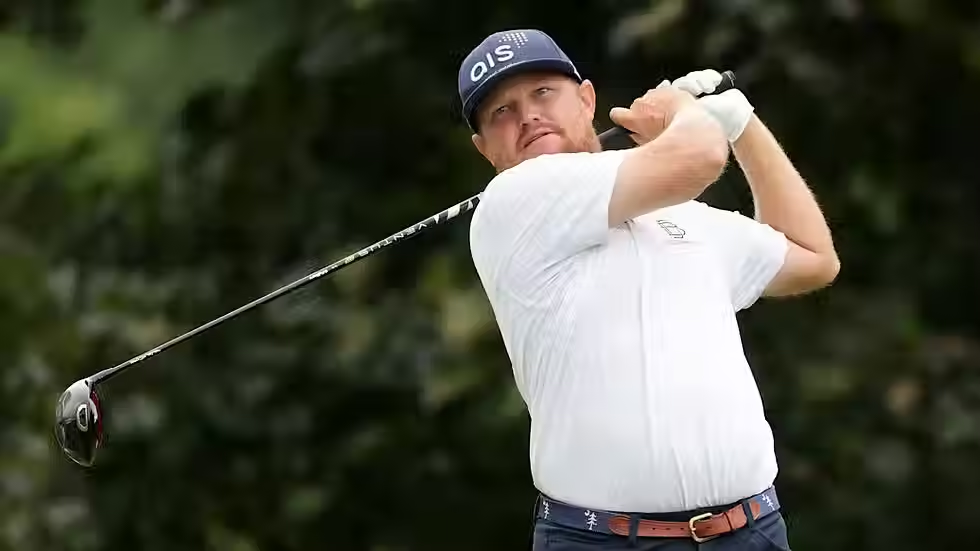
Kevin Streelman +7500
My model has Kevin Streelman ranked eighth this week, and +7500 pays well for a player my numbers put inside the top 10. The headline is a veteran arriving off his best finish of the year, and a putter that has helped him all season. At 48, Streelman is no longer the player who contended at the biggest events, but Port Royal rewards experience in the wind, and he is coming off a T5 that showed the game is in better shape than the summer results suggested.
Streelman finished T5 at the Bank of Utah Championship at 22 under, with rounds of 63, 64, 68 and 67, and that came a few weeks after a missed cut at the Biltmore Championship Asheville. Before that, his summer was mixed, with a T38 at the Wyndham Championship, a missed cut at the Rocket Classic and a T39 at the ISCO Championship. At Port Royal last year he finished T61 at 6 over, fading with a 76 on Sunday. The Utah performance is the best recent evidence, but it came in a shootout that Port Royal is unlikely to replicate.
Streelman’s profile is built around the putter, which sits above tour average and helps on Bermuda greens. Off the tee and around the green he is near the middle of the pack, which is workable on a short course where neither distance nor flashy short game is required. His approach play is below tour average this season, and that is the real problem, because irons into small targets in the wind are what Port Royal asks for. If the iron play does not improve, his putting alone is unlikely to carry him to the top of the board.
The case for Streelman is experience, a hot putter and the best finish he has produced all year, all at a price that makes the downside acceptable. The iron play is the biggest risk, and it is the one category that could undo the whole bet in a windy week. I see him as the longshot of the group.
2026 PGA Tour Strokes Gained Rankings:
Total: 81st
Off-the-Tee: 96th
Approach: 100th
Around the Green: 78th
Putting: 46th

My outright card is built around a minimum 10x return on my unit. In practice, that means I spread one total unit across all my selections for the week, structured so that any single winner returns at least 10 units. This means I only need to hit one outright in ten tournaments to break even. It keeps me honest about the odds I'm willing to accept and prevents me from chasing value at prices that don't justify the risk.
That said, this is my system, and it works for my bankroll and my risk tolerance. Yours may look completely different, and it should. Figure out what return threshold makes sense for you, how many units you're comfortable putting at risk in a given week, and build from there. The best betting system is the one you can stick to consistently, not the one that sounds best on paper.
Daily Fantasy Sports Selections
$10,000+ Price Range: Ben James ($10,900)
Ben James is the only player priced in the top tier at $10,900, and he is also my number one player in this week’s model, which makes him one of the easier calls on the board. The headline is a rookie who arrives with three straight top five finishes against a field with nobody from the world’s top 50. When the best player in your model is also the only player in the premium tier, there is no one else near the top of the salary board to chase. He is going to be very heavily owned, but at this number I’m comfortable paying it.
James finished third at the Wyndham Championship at 18 under, second at the Biltmore Championship Asheville at 24 under after a closing 61, and T5 at the Bank of Utah Championship at 22 under with rounds of 65, 66, 64 and 67. Before that run he posted a T4 at the Corales Puntacana Championship in July, though he missed the cut at the 3M Open the week after. Port Royal is new territory for him, so he has no history here to lean on, and that is the main thing I’d flag. His season profile is strong across the board, with off the tee, approach and putting all well above tour average and the short game modestly above average. That is a rare complete package for a course that tests wind control, approach play and scrambling, though the around the green number is the one that isn’t a standout at a venue that rewards scramblers.
At this salary and ownership, I’m treating James as a core, build-around piece rather than a differentiator. Fading the one clear top-tier option in a field this thin means betting against my highest ranked player, and I would rather take the ownership than the leverage. Paying $10,900 also forces discipline elsewhere, so I plan to separate my lineups from the field by loading up on lower owned pieces in the mid and value tiers. He fits both formats, since the floor looks solid enough for cash games and the ceiling is a legitimate win contender for GPPs.
2026 PGA Tour Strokes Gained Rankings:
Total: N/A
Off-the-Tee: N/A
Approach: N/A
Around the Green: N/A
Putting: N/A

$9,900 - $9,000 Price Range: Chris Kirk ($9,500)
Chris Kirk at $9,500 is one of my favorite plays on the board, and my model has him 13th in the field. The headline is a top tier iron game attached to a mid-tier salary in a week where approach play carries so much weight. Port Royal rewards players who can flight irons into the wind, and Kirk has been one of the better approach players on tour this season. He should be moderately owned, which is a spot I’m happy to play from.
Kirk comes in off a T21 at the Bank of Utah Championship at 17 under, where he opened 68 and followed with a 63, and a T8 at the Rocket Classic at 12 under before that. He also finished T72 at the Wyndham Championship in between, so the form has not been a straight line. He has never played Port Royal, which is a real gap in the evidence. His approach play ranks highly on the season, his short game is above average and his driving sits right around tour average, all of which fit a course where position and scrambling matter more than power. The putter is the glaring weakness, as he sits near the bottom of the tour, and a hot week on the Bermuda greens could be what separates him from the pack.
I’m treating Kirk as a play I like regardless of ownership, and I plan to build around him. Moderate ownership at a premium salary gives me a modest edge without taking on real leverage risk. Because his putting can swing his weekend in either direction, I’d diversify the rest of my lineup with a few lower-owned plays so the build doesn’t rely on one putter getting hot. I’m comfortable with him in both cash games and GPPs, though the ceiling really shows up in tournaments.
2026 PGA Tour Strokes Gained Rankings:
Total: 79th
Off-the-Tee: 90th
Approach: 14th
Around the Green: 53rd
Putting: 154th

$8,900 - $8,000 Price Range: David Ford ($8,800)
David Ford at $8,800 is a play I’m happy to make because my model has him third in the field, which is a huge gap relative to his salary. The headline is the combination of power and recent results that suggests a breakthrough is close. He tied for third at the Bank of Utah Championship at 23 under earlier this month, and he did the same thing at the same tournament last year. At this price, a top three ranked player is hard to pass up even with some ownership attached.
Ford’s Utah finish came a few weeks after a missed cut at the Biltmore Championship Asheville, and his results this year have been up and down, with a T13 at The American Express in January and a T16 at the Puerto Rico Open in March mixed in with several missed cuts. He missed the cut at Port Royal in 2025 as a rookie, with rounds of 71 and 74, so the course is not one he has figured out yet. His best attribute is off the tee, where he ranks well above tour average and gives himself short irons into the par 4s and chances to reach the par 5s. His approach play is roughly average and has slipped recently, his putting is around average, and his around the green numbers sit below tour average, which is the real concern at a venue where scrambling shows up in the winners’ profiles.
Ford should come in with moderate to high ownership, and I’m willing to take it. A model rank this high for the salary justifies eating the ownership, and I’d rather have the player than chase leverage. His ceiling is strong enough for GPPs given his power and recent finishes, but the missed cut risk this year makes him more of a tournament play than a cash game one for me. I plan to diversify around him by pairing him with the lower-owned plays in the cheaper tiers.
2026 PGA Tour Strokes Gained Rankings:
Total: N/A
Off-the-Tee: N/A
Approach: N/A
Around the Green: N/A
Putting: N/A

$7,900 - $7,000 Price Range: Zecheng Dou ($7,800)
Zecheng Dou at $7,800 is my 16th ranked player and a mid-tier salary I expect to be owned at a moderate to low rate. The headline is an approach and short game profile that fits Port Royal at a price that should keep him off most radars. He has played here before and posted a T17 in 2022, which is more history than most players at this salary can claim. If he lands in the right week, this is a differentiation play with real upside.
Dou’s best recent result was a T7 at the Biltmore Championship Asheville at 20 under, where he closed 65-65, and he also finished T16 at the 3M Open and T21 at the John Deere Classic over the summer. The rest of the picture is rougher, including a 67th at the Bank of Utah Championship at 7 under and six missed cuts across the ten starts ending with Biltmore. His other Port Royal result was a T65 in 2023. His strengths are approach play and the short game, both above tour average, with putting close to average, and that combination works at a course that rewards wind control and scrambling. Off the tee is the weak spot, since he hits it a long way but loses strokes with accuracy, and that can hurt him when the wind pushes tee shots offline.
I’m treating Dou as a low to moderately owned differentiation play, and his boom or bust profile points toward GPPs rather than cash. With half his recent starts ending in missed cuts, I would not trust him for a safe floor. In tournaments, though, a player who can post a top 10 in a thin field at a low ownership percentage can separate a lineup from the pack. I’d pair him with chalk like James and spread the rest across the other values.
2026 PGA Tour Strokes Gained Rankings:
Total: 62nd
Off-the-Tee: 102nd
Approach: 49th
Around the Green: 59th
Putting: 84th

$6,900 - $6,000 Price Range: Paul Peterson ($6,900)
Paul Peterson at $6,900 is my 20th ranked player, and in a field this shallow, that kind of model rank at this salary is exactly what I’m looking for. The headline is a short game and approach profile that fits a 6,828-yard course where distance is not rewarded. Everyone in this price range should be extremely low owned given how thin the field is, so the edge here is picking the right cheap player rather than finding one nobody will touch. Peterson has played Port Royal and made the cut last year, which helps.
Peterson’s recent form is inconsistent, with a T43 at the Biltmore Championship Asheville at 12 under followed by a missed cut at the Bank of Utah Championship at 5 under. Over the summer he posted a T24 at the Corales Puntacana Championship, a T49 at the ISCO Championship and missed cuts at the 3M Open and John Deere Classic. His best finish this season is a T5 at the Puerto Rico Open in March, and he finished T52 at Port Royal last year. His approach play and short game are both above tour average, and his putting has been around average to slightly below, which fits a course that rewards iron play and getting up and down. He is one of the shorter hitters on tour and loses strokes off the tee, but Port Royal’s modest length and the limited reward for driving distance blunt that problem.
Peterson is a low-owned play, though so is everyone at this salary, so I’m not counting on a big ownership edge. His value is the salary relief, since a $6,900 player lets me afford James, Kirk and Ford without sacrificing balance. He is a GPP only play for me because the missed cut risk makes him a poor cash option. I’d rather take a swing on the player my model likes best in the tier than spread the risk across several punts.
2026 PGA Tour Strokes Gained Rankings:
Total: N/A
Off-the-Tee: N/A
Approach: N/A
Around the Green: N/A
Putting: N/A

Gambling Disclaimer
All content in this article, including but not limited to outright betting selections, daily fantasy sports recommendations, odds references, and any related commentary, is provided for informational and entertainment purposes only. Nothing contained herein constitutes financial, investment, legal, or gambling advice of any kind, and should not be relied upon as such.
All picks, opinions, and analysis reflect the personal views of the author at the time of writing and are subject to change. There is no guarantee of results. Past performance is not indicative of future outcomes, and the author accepts no liability for any losses, financial or otherwise, incurred as a result of acting on any information contained in this article.
By reading this content, you acknowledge that sports betting and daily fantasy sports involve substantial financial risk. You should never wager or contest money that you cannot afford to lose. It is your sole responsibility to ensure that any participation in sports betting or daily fantasy sports is legal in your jurisdiction before doing so.
Out of the Rough and its contributors are not licensed gambling operators, financial advisors, or legal professionals. This content is not affiliated with, endorsed by, or sponsored by any sportsbook, daily fantasy sports platform, or gambling organization.
If you or someone you know is struggling with a gambling problem, help is available. Please contact the National Problem Gambling Helpline at 1-800-522-4700 or visit ncpgambling.org. Support is available 24/7, free, and confidential.


Comments